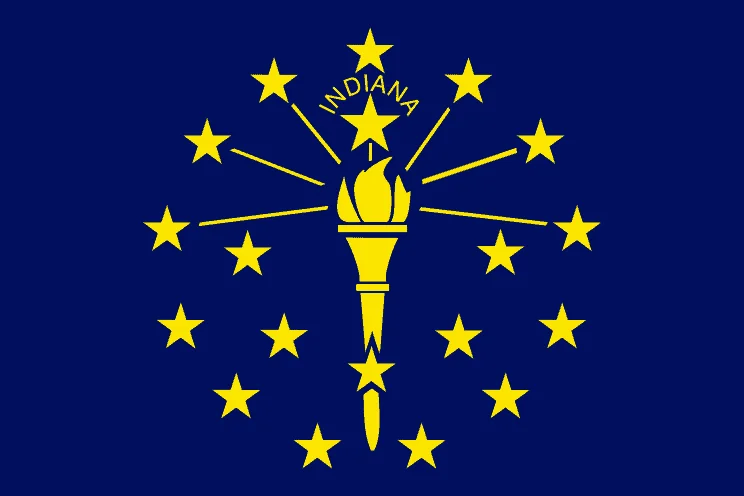
The fragmentation of our government can be a source of confusion for many families across the nation, especially when navigating the programs they rely on. With so many moving parts, understanding Indiana’s extensive state-run systems can feel overwhelming. That’s why The Sibling Foundation is committed to educating communities and simplifying the complex systems we live in. Here is a simple guide to help Indiana Hoosiers navigate the state’s branches of government:
Legislative Branch
Referred to as the Indiana General Assembly (IGA), the legislative branch consists of the House of Representatives & Senate and is responsible for enacting laws and creating and approving the state budget.
The Indiana House of Representatives is made up of 100 members that serve 2-year terms, each representing a local district. They are responsible for introducing legislation and bringing local concerns to the state level while advocating for their district’s needs.
The Indiana Senate is made up of 50 members that serve 4-year terms, each representing a larger district. They are responsible for reviewing, refining, and finalizing laws, alongside confirming key state appointments that are nominated by the Governor.
To find or contact your district’s representative or senator you can visit: https://iga.in.gov/information/find-legislators
Upcoming Elections!!!
Indiana’s 2026 Primary Elections will be held on May 5th, 2026.
Who is on the Legislative Branch ballot?
- State Representative — 216 candidates ( 100 seats statewide)
- State Senator — 88 candidates (50 seats statewide)
- U.S. Representative — 53 candidates (9 seats statewide)
Voting in primary elections is essential because it allows Hoosiers to choose the candidates who will represent their communities and make decisions that directly impact their daily lives.
For more information on voting please visit https://indianavoters.in.gov/
Data Source: 2026 Indiana Primary Candidate List (Excel Sheet)
Last Updated: 3/25/2026
https://www.in.gov/sos/elections/
Executive Branch
The executive branch is responsible for enforcing state laws and carrying out state government programs. It is made up of the following:
Governor
Serves as the head of state government, enforcing state laws and overseeing state agencies and departments.
Lieutenant Governor
Serves as the second-in-command, presides over the State Senate, and oversees specific statewide programs and agencies, including:
- Indiana State Department of Agriculture (ISDA)
- Indiana Housing and Community Development Authority (IHCDA)
- Office of Community and Rural Affairs (OCRA)
- Indiana Destination Development Corporation (IDDC)
Attorney General
Serves as the legal representative of the state.
Secretary of State
Oversees business filings, elections, and licensing.
State Auditor
Manages state financial records and payments.
State Treasurer
Oversees state funds and investments
State Agencies & Departments
Indiana Agencies & Departments work together to provide essential services that impact the healthcare, education, safety, and daily lives of Hoosiers. Here is a list of Indiana’s primary state agencies.
- Family and Social Services Administration (FSSA)
- Department of Child Services (DCS)
- Department of Correction (IDOC)
- Indiana Department of Homeland Security (IDHS)
- Indiana State Police (ISP)
- Indiana Department of Transportation (INDOT)
- Indiana Department of Natural Resources (DNR)
- Indiana Department of Environmental Management (IDEM)
- Indiana Department of Workforce Development (DWD)
- Indiana State Department of Health (IDOH)
- Indiana Department of Revenue (DOR)
- Indiana State Department of Agriculture (ISDA)
- Indiana Department of Administration (IDOA)
- Indiana Department of Veterans Affairs (IDVA)
- Indiana Housing & Community Development Authority (IHCDA)
Together, these agencies ensure that essential services are delivered efficiently and effectively to support the well-being of all Hoosiers.
Upcoming Elections!!!
Indiana’s 2026 Primary Elections will be held on May 5th, 2026.
Who is on the Executive Branch ballot?
County Leadership
- County Commissioner — 202 candidates (3 seats per county)
- County Sheriff — 198 candidates (1 seat per county)
- Prosecuting Attorney — 121 candidates (1 seat per judicial circuit)
Financial & Administrative Officials
- County Assessor — 103 candidates (1 seat per county)
- County Auditor — 88 candidates (1 seat per county)
- County Treasurer — 19 candidates (1 seat per county)
- County Recorder — 77 candidates (1 seat per county)
- Clerk of Circuit Court — 99 candidates (1 seat per county)
- County Surveyor — 32 candidates (1 seat per county)
- County Coroner — 30 candidates (1 seat per county)
Local Government (City & Town)
- Mayor — 4 candidates (1 seat available per city/town)
- Town Council Member — 423 candidates (varies by population & location, 3-7 seats per town)
- City/County Council Member — 10 candidates (varies by district, 7-9 seats per city/county).
- Clerk-Treasurer — 66 candidates (1 seat available municipality)
- City Clerk — 2 candidates (1 seat per city)
Township Government
- Township Trustee — 1,097 candidates (1 seat per township)
- Township Board Member — 2,831 candidates (3 seats per township)
- Township Assessor — 16 candidates (1 seat per township)
Voting is important because it allows Hoosiers to choose the leaders who enforce state laws and manage essential services like healthcare, education, safety and infrastructure, and key programs that directly impact everyday life.
For more information on voting please visit https://indianavoters.in.gov/
Candidate Data Source: 2026 Indiana Primary Candidate List (Excel Sheet)
Last Updated: 3/25/2026
https://www.in.gov/sos/elections/
Judicial Branch
The judicial branch of Indiana is made up of four levels: Trial Courts, Court of Appeals, Tax Court, and the Supreme Court. Together, they are responsible for interpreting laws, resolving disputes, and ensuring that legal rights are protected across the state.
Trial Courts
Serving as the initial level of the judicial system, trial courts include circuit courts , superior courts, city courts, and town courts. They interpret and apply the law, protect our legal rights, and handle both civil and criminal matters.
Courts of Appeals
Serving as the second-highest court, the Court of Appeals reviews decisions made by trial courts and some state agencies to determine whether the law was applied correctly.
Tax Courts
The Tax courts have jurisdiction over cases involving Indiana tax laws. It reviews appeals of final decisions made by the Indiana Department of State Revenue or the Indiana Board of Tax Review, as well as certain cases from the Department of Local Government Finance.
Supreme Court
The Supreme Court serves as the highest court in Indiana. It has final authority over the interpretation of state laws, the Indiana Constitution, and the rights guaranteed under the State’s Bill of Rights.
Upcoming Elections!!!
Indiana’s 2026 Primary Elections will be held on May 5th, 2026..
Who is on the Judicial Branch ballot?
- Superior Court Judges — 108 candidates (250-260 seats statewide)
- Circuit Court Judges — 40 candidates (1 seat per judicial circuit/count)
- Small Claims Court Judges — 10 candidates (1 seat per county)
- Constables (Small Claims Court) — 21 candidates (1 seat per township/small claims court system)
- City Court Judge — 1 candidate (20-30 seats statewide)
Voting is important because it gives Hoosiers a voice in selecting judges across Indiana’s judicial system who will interpret laws, resolve disputes, and protect the constitutional rights and legal protections that impact everyday life.
For more information on voting please visit https://indianavoters.in.gov/
Candidate Data Source: 2026 Indiana Primary Candidate List (Excel Sheet)
Last Updated: 3/25/2026
Disclaimers
This article is intended for informational and educational purposes only. While efforts are made to ensure accuracy, government structures, candidate listings, and election details may change over time. Readers should verify all information with official Indiana state and local election sources, including the Indiana Secretary of State and Indiana Voters websites, before making any decisions. The Sibling Foundation does not provide legal or voting advice.